


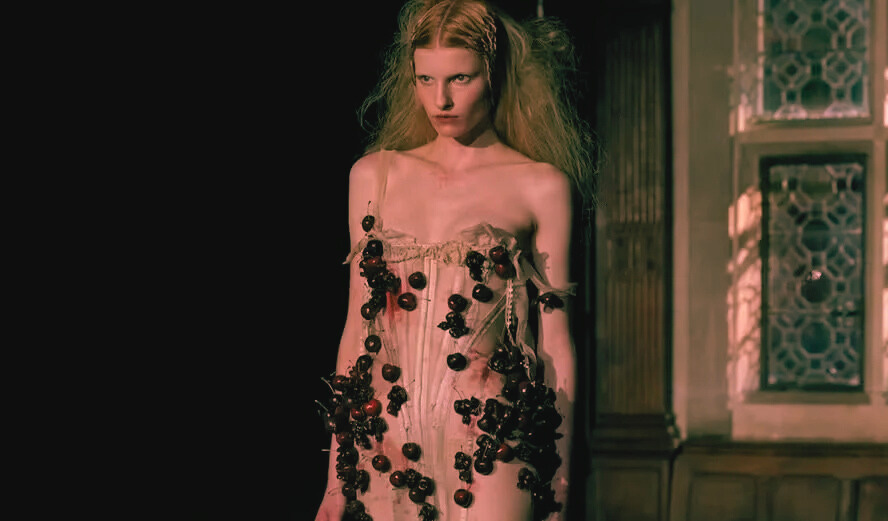
As I write those lines, London Fashion Week fades into a distant Instagram memory. And yet, as I scroll, one name refuses to disappear from the online discourse: Dilara Findikoglu. The Turkish designer who built her gothic-meets-transgressive empire on shock value is once more faced with allegations that make her darkest runway looks seem, well, less dark.
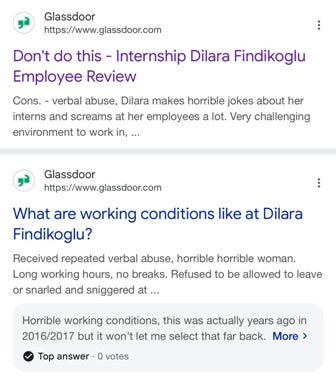
Glassdoor reviews paint a workplace horror story. “Every evening, interns were even asked to withdraw cash to pay her seamstress, which felt completely inappropriate. I also witnessed a lot of toxic behaviour: staff being manipulated, gaslit, and spoken to in an abusive way.” More reports describe 90-hour work weeks, verbal abuse, and systematic emotional manipulation of young creatives desperate for their fashion break. It was a matter of time before this exposé became a TikTok hashtag.
A long time ago, I bumped into a key aesthetic issue this time masquerading as a Quora question:Is it necessary to be a good person to be a good artist? it wrote. The responses were overwhelming, and random people concluded that artistic talent has nothing to do with human decency. A good designer understands color theory, construction, and visual impact—period. Their character seems irrelevant to their artistic abilities. Musicians, actors, and visual artists (Picasso instantly comes to mind) master their craft through knowledge and experience, alas, not moral superiority.
I like Dilara’s work. I can feel her artistic soul emerging from her designs. And even Walter Benjamin knew that “at the base of every major work of art is a pile of barbarism.” But when former employees describe being treated as personal ATMs and emotional punching bags, I feel we’re not talking about artistic darkness anymore. Sometimes we’re talking about actual abuse dressed up as creative passion.
Before Dilara, we had the very public fall of fashion’s all-time genius John Galliano. And not only. Fashion has always celebrated its beautiful monsters, its tortured geniuses, its provocateurs who blur lines between art and cruelty. The question is: when we appraise to work, do we keep enabling super-talented people who allegedly steal, abuse, and spread hate?


I asked the experts.
Fashion consultant Philip Alexandre Livchitz notes that: “While you can be a great designer technically and execute lofty concepts incredibly well, you also have to run a sufficiently well-regarded business—especially in the current luxury landscape.
Should an investor approach your business and discover a ton of unsavoury information whilst conducting due diligence, it’s highly unlikely that it would ever warrant a capital injection, especially given the regulatory obligations most investors have, in addition to their own reputation. (Unless, of course, this would be done by an angel investor with a relatively large risk appetite). As such, courting over a decade and now are two very different stories—previously a sign of notoriety, nowadays a sign of potentially derailed expansion opportunities.”
Louis Pisano, the fashion journalist who helped showcase the issue through his sharp online commentary, captures the moral complexity perfectly: “I think it’s complicated. On one hand, it feels disingenuous to judge a designer’s work solely based on allegations or bad behavior; a dress or a jacket doesn’t exist in a moral vacuum. But on the other hand, that work didn’t happen outside of the person who created it. It’s intrinsically tied to its creator and everything they stand for.
At the end of the day, it comes down to what you personally value and where you draw the line. You can choose to engage with the work or choose not to. I see it all the time on Twitter: someone will love a dress until they find out it’s Dolce & Gabbana. People have to be honest with themselves and make a decision they can live with, then stick to it.”
Dana Thomas, fashion journalist and author of Gods and Kings: The Rise and Fall of Alexander McQueen and John Galliano, amongst others, delivers a verdict with zero tolerance for industry excuses: “This is 2025. Bad behavior in any business isn’t acceptable, nor should it be tolerated. And the fact that fashion still knowingly allows this to happen—especially major luxury brand executive leadership—is shocking, unethical, and bad business. Fashion is now a global, publicly traded industry. It should behave as such. Diva antics, employee abuse, drugs, and booze on the job are not only unacceptable. It’s so out of fashion.”
Fashion writer, consultant, and stylist, Philip Pourshashemi, cuts through the noise with precision: “We do live in a world where people are constantly accused of bad behavior just to stir up controversy, but when one person has committed an actual crime or is a repeat offender, then I believe there should be consequences. Fashion seems to forgive sexual predators a little too easily, and that needs to change. We can’t keep praising people who perpetuate a culture of abuse, especially in creative circles.”
The dark aesthetic will survive. Whether fashion’s tolerance for actual darkness finally evolves remains to be seen.
Interesting. I didn’t hear about that with her before… also not shocking.