

Memory Is A Radical Act
A Conversation With Cyberethnographer Ruby Justice Thelot on Social Contagion, Algorithmic Capture, and the Illusion of Shared Reality

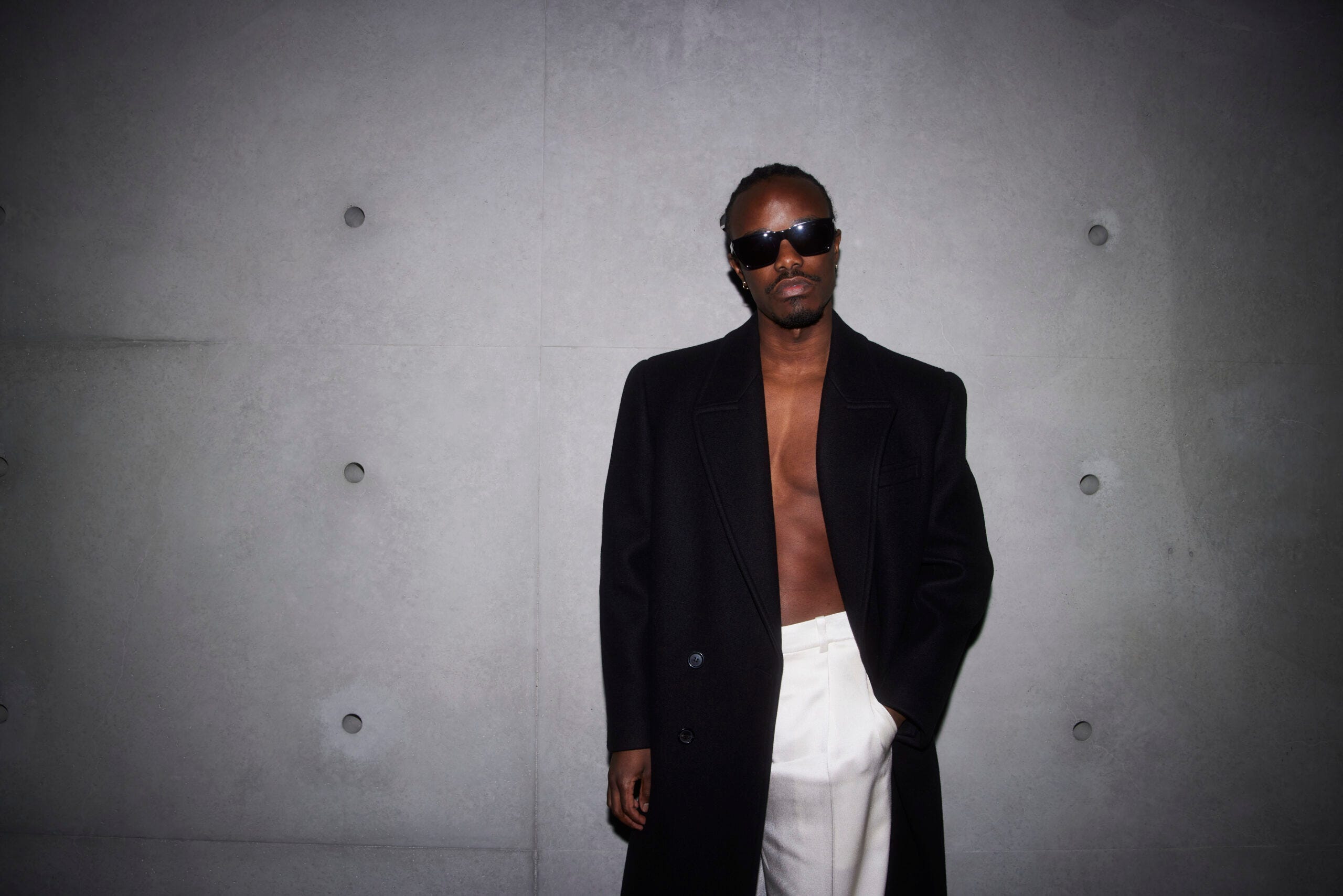
It takes a unique type of scholar to conceive, let alone fully write, a book that is an homage to the innumerable efforts at staving off the ineluctable demise of all digital memories. Specifically, Ruby Thelot’s work has focused on Checkpoints, an emergent behavior which occurred in the comment section of a YouTube video from 2012 to 2021, where users, when algorithmically recommended the video, would write a “checkpoint”: a personal life update.
He has also ventured into perhaps the most talked-about trait in the meta-internet: taste. His collection “A Few Essays on Taste” covers fashion, trends, and culture. And in his recent essay for SSENSE, he calmly calls looksmaxxing for what it is, simply a movement that radically proposes the virtual is not enough; we must actually look like our avatars.
But then again, Ruby Thelot isn’t your typical scholar. He is an artist and cyberethnographer based in New York City whose work focuses on digital phenomenology, virtual ontology, and the implications of being online. He writes about virtual realms, digital communities, and artificial intelligence.
Moreover, Ruby is an adjunct professor of Design, Media, and Technology at New York University and a keynote speaker who has given talks to industry leaders, executives, and academics on technology, artificial intelligence, new media, and the metaverse. And it is this unexpected combination of seemingly unrelated topics, finally finding their place together in his essays, that explains the digital world that made me want to interview him in the first place. I was honored he accepted. We discussed social media, taste (of course), and why, in his own world theory, memory is the radical act we have left.
To what extent do you think social media doesn’t just reflect taste, but actually actively produces it? Is there such a thing as a preference that forms outside of collective validation?
The answer is yes, of course. Whether that be the act of going by yourself to visit a museum or listening to music you haven’t been recommended, I think all these things can help you form your own sense of taste and appreciation outside of collective validation.
What I’d like to talk about specifically in that context is randomness. I think randomness is actually a response to algorithmic recommendation. To form your preference outside of collective validation, often this means going to a record store, Metrograph, or any place where you engage with culture, and doing the thing that another person has selected to put there for some reason. The clerk at the record store who placed that record there, or the unique taste of a highly specialized individual, like a film programmer in the case of Metrograph or a film festival, or a museum curator.
Do you see algorithmic trend cycles as a form of crowd behavior closer to contagion than choice? If so, what makes digital crowds different from historical ones?
I don’t think there’s anything particularly different about digital crowds. I like to talk about what I call mass psychogenic events. These are disseminated events, much like the dance craze of the 15th or 16th century — la danse macabre, the dance of death — when people could not stop dancing and it became a social contagion in the medieval era.
The only thing the digital affords is distribution. It is distribution accelerated by digital technology. But for the most part, social contagion has been happening throughout history. If you look at one of my works, Why Aliens Love America, I talk about the alien phenomenon as another form of mass psychogenic event, another form of social contagion — and that was in the 1960s, before much of this digital distribution existed.
So it has an additional affordance in distribution, but this has been happening for a long time.
Fashion has always involved imitation, but do you think something fundamentally changed once imitation became quantified through likes, views, and virality?
This is one of my main concepts. I talk about it in my essay, The Content Creator as a Folk Artist. There has always been mimesis, the Greek term for imitation, and it is fundamental to human sociality. We see what other people are doing, and then we copy. In the words of Hannibal Lecter: what does he do, this man you seek, Clarice? He covets. This triangular desire, as expressed by René Girard, is very important here.
Now, what likes, views, and virality do is take a cultural object — an image, a piece of clothing — and add to it a dimension that was previously hidden. That dimension is the social response. What this implies is that every image now, and fashion specifically, is a visual medium that exists not only as a standalone image, but as what Nathan Jurgenson called a social photograph. The social photograph is the image plus likes, views, and so on — the total whole of the digital object, which includes the image along with its social reception.
This pushes the image into a space where it now has two phenomenologies, two forces exerted onto it. The first is audience capture, where the creator — the artist, the folk artist — is responsive to the metrics they see on the platform. The second is algorithmic capture: the way in which the creator is influenced by how the algorithms respond to the work, whether or not it gets shown in the first place. These two forces are exerted on fashion.
If mass psychosis is characterized by a loss of shared reality, what would reality in fashion even look like right now? Craft, longevity, silence, loneliness?
It is the opposite, if you think about it. Mass psychosis is characterized by the advent of a new shared reality — we can no longer stop dancing, but we’re all dancing together. Similarly, when I talk about aliens as a mass psychogenic event, suddenly we share this alternative reality whereby these entities, these creatures, exist.
It is not about the loss of a shared reality; it’s about the fracturing of reality. But these could be fairly large communities in and of themselves, each sharing different realities. And the question I would push back with is: was there ever a shared reality in the first place? Or is the shared reality a chimera? Was it an imagined state, almost like Rousseau’s state of nature? Is it a confabulation of the nostalgic mind to believe there was such a thing as a shared reality? That’s the question I would ask you.
Is the speed of trend turnover dulling our capacity to develop taste over time?
It only does if you care about trends. If you’re going to see your fabric person, your tailor, your alterations person down the street — shout out Antoinette in Ridgewood — then I don’t know that any of this actually matters. You can opt out. You can choose to refuse. This is very important to me. It does not matter how fast trends move if you don’t engage with them.
Your role as a person immersed in culture, be it producing, consuming, or commenting on it, is to be discerning. To choose what you want, what you want to do, and what you don’t. Goblincore, cottagecore, Russian mob wife, quiet luxury, all of these things. It doesn’t matter. What do you want to wear? When do you feel sexy? When do you feel hot? When do you feel powerful? What kind of shoulders make you walk into a room and feel like you own it? What sweater makes you feel like the coziest bug? That’s all that matters in the end.
When you’re touching that sweater in the store, when you put on that tight tank top, when you slide on loose-fitting jeans — who is that girl? Who is that man? That is your taste. The person you’re trying to become, the fabrics you love, the designs that make you go — that’s how you develop your taste. The trends are on screens. Go put on a pair of pants and tell me if your ass looks good in them. That’s what I care about.