

Gatekeeping Doesn't Make You Chic
Growth Strategist Jess Yin on Why Exclusivity Reads as Insecurity — And What an Open Internet Could Do for Fashion Instead

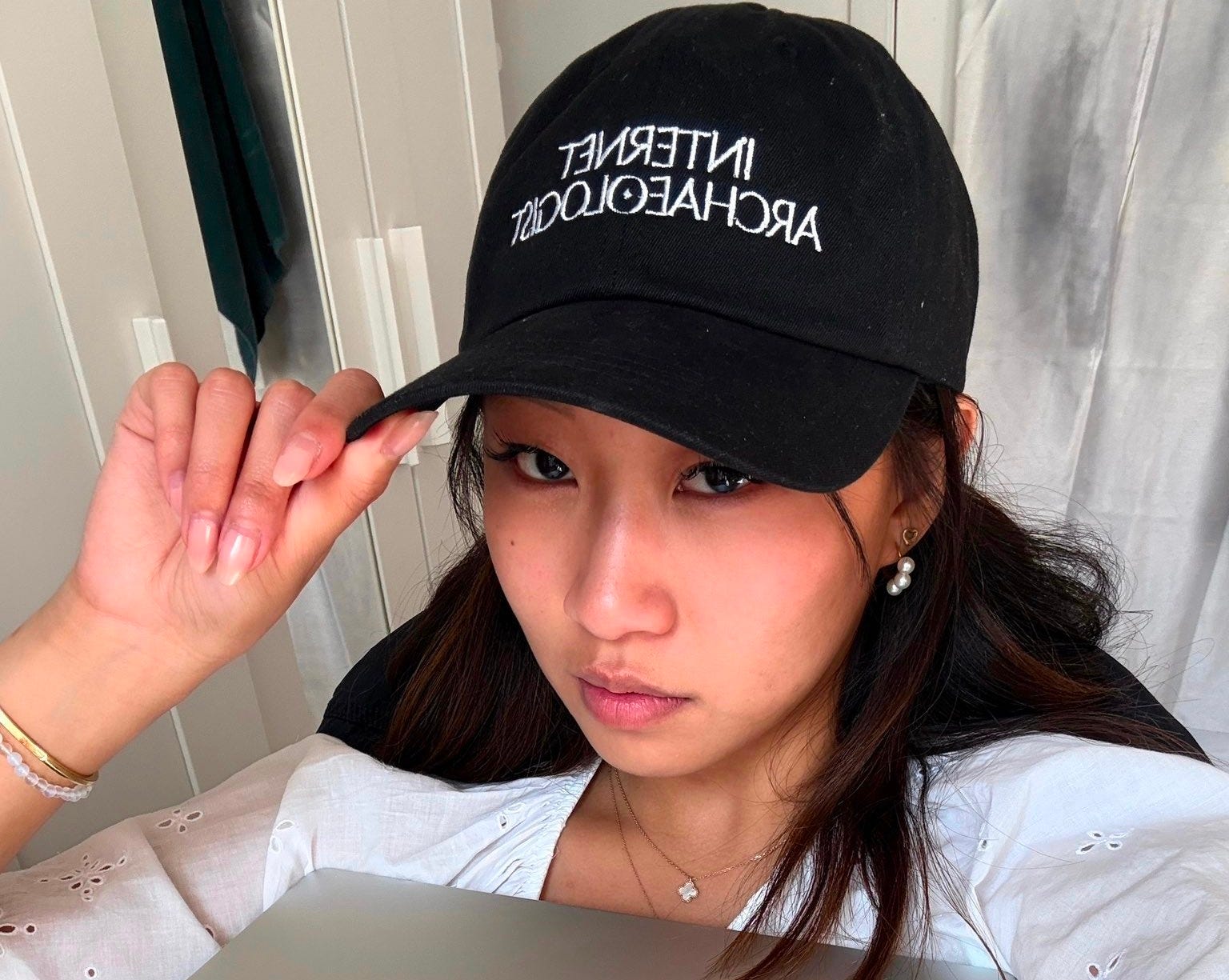
You can easily say Jess Yin has already lived a few lives inside the same through line: twelve years of classical ballet, painting since she was four, a stint on Evercore’s alternative asset managers M&A team, an apparel brand she co-founded called SERENA LI, and a fashion-tech company, Inseam, before all of it. Now she builds digital worlds — interactive, experimental web experiences that, unsurprisingly, treat code the way she once treated a canvas or a barre.
For Yin, AI is a medium with the same open borders as a canvas, not a shortcut around the work of making just something. We talked about gatekeeping —in fashion media, in luxury brands’ hesitance around AI, in the archives that heritage houses still won’t open — and about why, no matter how digital the tools get, fashion keeps pulling us back into the body.
You built a digital archive drawing on the Met Costume Institute’s collection at a moment when so much of fashion media is closing itself off — paywalls, no-phone policies at shows. What made you want to build something open instead?
Especially in media, things have gotten very closed off right now; Vogue Runway put up a paywall, shows are going no-phones. I think it’s important that things stay open and accessible, so I’d love to see more archival fashion history projects like this, especially now.
That makes sense, and it has to be done carefully because so many people online are posting images from the past without doing proper research. Young people on TikTok or X end up learning this stuff completely wrong, or at least without the context it was meant to have.
I agree. Another thing is that a lot of these databases are skewed toward a certain time period or part of the world. When I made mine, people pointed out that it was mostly, if not all, European fashion — and that’s just what the Met Costume Institute had. They didn’t have many Asian pieces, or pieces from Africa or Australia or other parts of the world. So as we continue to document and archive things, I hope the databases grow and become more representative of other cultures.
How did you initially get involved with fashion?
I’ve been interested in fashion for a long time; since I was a little kid, I remember playing dress-up in my mom’s closet. As I got older, I started thrifting more and putting pieces together, so I think I was always really into it. The way I got here is a bit of a funny story. I studied business in college and then worked in finance after school.
During that time, I realized I was sitting in front of a computer all day looking at numbers, which was very boring, and I felt unfulfilled. So I started looking for other things I found inspiring, such as art and fashion. At the time, I was living in Soho, which is New York’s fashion center, with all these stores and events happening, so I threw myself into it for inspiration because my day job was so draining.
Eventually I left that job and hit this lull of “oh my god, what do I do?” I ended up working with a friend from high school, and we started a brand together. That was my first real foray into the fashion world, and I met a lot of cool people through it. Overall, it’s important to me that people recognize fashion as more than just clothes — it’s our social context, it reflects the economy, it reflects the politics of the time. I think all of my work tries to capture that.
You also have a Substack that speaks to that intersection of fashion and tech. Are you optimistic about technology and how it’s going to help creatives in fashion and beyond?
I think the biggest thing for me is that I don’t have a very technical background — I never studied computer science or anything. But the way technology is right now, it makes it easy for anyone to turn anything into an experiment.
Coming at it from a more artistic, non-technical perspective, creating software or even hardware is just another medium of expression for me, another vehicle for putting a message or a piece of work out into the world, the same way a paintbrush and canvas is. I think we’ll see more people making things in different formats as digital tools become more accessible. And many of them are extremely beautiful.
I recently came across The Pudding, a magazine made entirely of interactive essays, which I thought was really innovative. It was such a fun read, and I’ve been thinking about whether we could do something similar for fashion.
The fashion media landscape is interesting because most of the inspiring work is coming from smaller creators rather than the big legacy publications. I get the tension mega fashion media face- at the end of the day they’re trying to make money, so keeping things gated works in their favor. But fashion is only interesting when it’s spread, interpreted, and built on.
I hope we find a balance where the people doing cooler, more innovative work can collaborate with bigger publications. It always comes down to funding. I’ve never seen a genuine lack of ideas; it’s always about finding someone who believes an idea is worth funding.
Ideas build on each other — there’s no art of today without the art of fifty, a hundred, five hundred years ago. We build on it by borrowing from each other, so I think we really need to find a sweet spot, because gatekeeping doesn’t help anyone either.
I agree with you, and I’ve said as much to a lot of people I’ve spoken with. Gatekeeping doesn’t make fashion people look more alluring or chic — it makes us look stupid. It’s like The Devil Wears Prada, a caricature of what people think fashion is.
You have used your art background to understand fashion technology, in a way that didn’t restrain you. In fact, it seems to have given you an open mind.
For sure, I think that’s one of the more important things — it makes you creative and resourceful. When I first found out about AI coding tools and how people were making websites and apps with them, I didn’t see it as a way to automate my life and offload the annoying stuff. I was more like, I want to use this to make something I wasn’t able to make before. It felt like an exciting medium.
Like an art medium.
Exactly. It also made me more open-minded about how we apply this stuff in interesting ways. A more closed-minded response might be feeling threatened, not understanding what’s going on, thinking it’s stealing your job — and I understand why people feel that way — but I think it really is what you make of it. You can make it your tool instead of a threat, and that mindset has helped me expand my creative horizons.
How would you describe it to someone who doesn’t know your work?
Right now I make a lot of digital web experiences. It started off pretty experimental, and a couple went viral, which I didn’t expect. I think people crave a more personal internet, like the early Tumblr days, when everyone had their own highly curated little corner. Now it feels diluted by the algorithm, and there’s a lot of exhaustion with the platforms — a lot of slop going around.
Sometimes startups want to do a launch or a campaign, and I’ll help them build those too. My work is a combination of the artistic and the technical. The creative direction and artistic vision have to come from the mind, but the execution is technical, because someone has to actually write the code and put it on screen.
How do you see fashion right now, through your own particular lens? Are fashion brands moving in the right direction?
It depends. On the AI conversation specifically, some brands are very open to it — Gucci and Balenciaga, the edgier leading brands, have been among the first to adopt it. There’s also been a lot of backlash, reasonably so, with people saying couture is meant to be human-made. I think we’re still in a weird phase, not just in fashion, of figuring out what the sweet spot is and how to actually use this properly. But I’d rather see brands experiment, get it wrong, and recalibrate than sit it out entirely and get left behind. Even when it lands a little awkwardly, I think it’s an important dialogue to have.
Other brands are using tech more in their operations, which is a pretty safe approach. But at the end of the day, tech will always bleed into culture and the art we make. Jacquemus did a campaign a while back with these surreal, massively out-of-proportion pieces that were really well received — that wasn’t AI, but it was technology functioning as art. As time goes on there will be other technologies used to make art, and we’ll just have to find the right usage and the right spot for each of them.
Why do you think luxury fashion brands hesitate to experiment?
One piece of insight that extends beyond fashion: I was talking to one of my old business-management professors, who works with a lot of executive teams. The way these teams assess AI usage is by listing out potential applications and ranking them by risk. Fashion brands are super big, with a massive loyal customer base and sales targets to hit — it would be a huge risk to implement AI, have it go wrong, and then have to fix it.
So people tend to start with the lowest-hanging, lowest-risk applications, even if they’re not especially high-impact. That’s my guess as to why these legacy companies are more risk-averse than newer ones — they have more at stake, more people to satisfy, and that naturally makes an organization slower.
With huge KPIs to hit, it makes sense that it would make brands hesitant to bring in more AI, or anything new. So what’s your take on where fashion goes from here?
Fashion moves incredibly slowly. I once worked on a project building software for apparel companies, on the production and operations side, and a lot of these organizations are just big and bloated — they have a hard time making changes because there are too many moving parts and too much legacy software to work around. That’s one piece of it.
There’s also a cultural aspect: the people who’d actually use these tools need to be open to adopting them. Even if a company buys the software, the employee still has to choose to use it; otherwise, the purchase was pointless. Right now people are still wary of these tools because we don’t fully understand what’s going on with them. As there’s more exposure, better communication, and better education, I think the culture will catch up — I just don’t know how long that’ll take.
I think there’s a sense of gatekeeping happening in the wrong direction — heritage brands not opening up their archives instead of making them available to the people they’re supposedly building the future for.
For sure. That’s culturally important too. I think it’s important to keep the internet open. Over the past couple of years, there’s been a rise in paid content, and there are pros and cons to that. The pro is that creatives get to monetize their platforms and be compensated; the con is that more quality material is being closed off.
I think the next phase of the internet is figuring out how to give people fair access to content, keep things from being clipped and lost, and archive things well while also making sure people, especially in creative industries, get paid. That’s probably the next big thing fashion, and the internet more broadly, needs to figure out.
.
Great piece. The idea of AI as a medium with open borders like a canvas, not a shortcut around the work, is such a refreshing take.
Such an interesting read. I agree with almost everything (because I can’t disregard AI’s environmental impact for now, if we’ll manage to make it sustainable I could get on board, even though I can see its usefulness if used properly). And I was truly bummed once I saw Vogue Runway was behind a paywall. After all, I don’t think they give a cut of that money to the people involved in the process, so it’s laughable to me, you can find the pictures elsewhere. The app was truly good though, that’s what irks me.