

Capital, Culture, Crisis
William D. Cohan About Wall Street's Influence on Culture, the Dangerous Euphoria of AI Valuations, and Why Financial Recklessness Always Returns

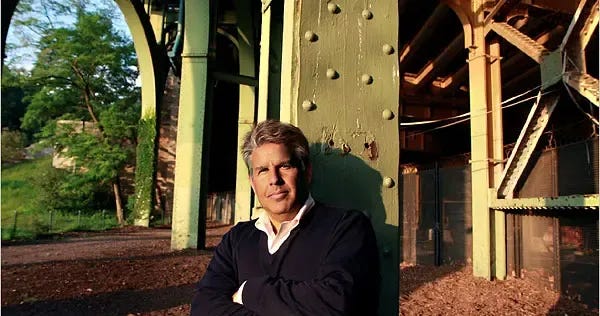
Ask around about William D. Cohan, and they will tell you it’s the award-winning journalist and bestselling author who spent 17 years as an investment banker on Wall Street before becoming one of the most respected chroniclers of finance and power. For me, he was something of a sacred totem of financial knowledge, which he aptly applied to explain the rich and powerful that shape our times. I so far knew culture wasn’t made in hidden, humid laboratories hidden behind unsuspicious-looking storefronts, but, as Bourdieu and Deleuze knew best, it is a direct derivative of the commoditization of the cultural means of production. That is, whoever has the money has the cards.
I first read Cohan’s critically acclaimed book House of Cards: A Tale of Hubris and Wretched Excess on Wall Street, which examined the collapse of Bear Stearns during the 2008 financial crisis and got enchanted, if this is the right word, in the insightful manner he explained even to the untrained mind (mine) how secret financial forces can expand their influence into everybody’s everyday life—yes, and mine. A former senior Wall Street correspondent for Fortune and a special correspondent for Vanity Fair, Cohan’s deep insider knowledge and investigative ‘nose’ have made him a singular voice in understanding how financial capital shapes culture, business, and society.
Never short of inspiration in today’s turbulent world, Cohan also wrote Money and Power: How Goldman Sachs Came to Rule the World, and The Price of Silence, about the Duke Lacrosse scandal. And there’s more—his forthcoming book explores Apollo Global Management and its transformation of Wall Street. Until then, though, he gave me the privilege to sit down and discuss all the above—and some more, for The Style Title.
Given your Wall Street background and coverage of finance, how has finance capital reshaped what gets produced culturally? Do corporate mergers and consolidations affect what gets made?
Finance is like an octopus—it has tentacles everywhere in every aspect of society. Every company needs capital, whether debt or equity, so Wall Street and finance work their way into everything. There are social media companies that influence culture directly, and they are obviously financed by Wall Street or investors. But there are also plenty of companies that influence culture that you don’t even think about, that also have to get their money from Wall Street. Is the company that makes the refrigerator in your apartment any less influential on your life than OpenAI or ChatGPT? It simply doesn’t get as much attention, but where would you be without your refrigerator?
Outsiders like to criticize Wall Street and finance because they feel it is an easy target. The people there make a lot of money, probably more money than they should or that they otherwise would be entitled to, especially since they may not take nearly as much risk for the reward they get. But can you imagine a world without Wall Street, without the capital that Wall Street provides? You wouldn’t have refrigerators, you wouldn’t have flush toilets, you wouldn’t have souvlaki—you wouldn’t have any number of things that you take for granted. It’s just the way our current society works.
Are there any brands we don’t know about publicly that play an important role in shaping culture?
Of course there are. I can’t, for obvious reasons, sit here and rattle them off, but there are millions of companies. Some of them have their own influence on our culture, and some we know and recognize, but many we don’t even know at all. They simply might be private companies we don’t even know of their existence.
You’ve chronicled extreme wealth, from ultra-rich summer colonies to impossible-to-join golf clubs. How has the visual language of luxury changed? Are the rich more or less ostentatious than in previous eras?
It has definitely changed like everybody else’s dress; it has become more informal, and people don’t wear suits as much. They don’t wear ties as much. Now everyone is into athleisure and designer sweats and things like that—and even rich people wear that kind of stuff. And it doesn’t look great, but that’s just my opinion.
Take Wall Street, the firm leaders generally continue to dress in business attire, though in a much more relaxed way. Most of the leaders and executives still dress up. But it’s acceptable to wear more casual, sporty attire if you’re not seeing clients or are just sitting at your desk working on your computer, and there are no meetings. In that sense, I think it’s acceptable to dress down. But no, you are not going to be able to wear sweatpants or jeans.
One of your books is titled House of Cards: A Tale of Hubris and Wretched Excess on Wall Street. Are we currently living through a tale of hubris and wretched excess?
That was a book about the collapse of Bear Stearns in 2008, how and what happened. I would say that we seem to be overdue for another financial correction. The markets are at or near all-time highs. Investors’ disregard for risk seems to be as acute as ever. So I do worry all the time that we’re heading into another period of financial recklessness—and not only.
You see, it always looks great before the storm occurs. Nobody rings the bell at the top of the market and says, “Okay, now’s a good time to sell everything.” People in general have short memories and forget that everything has a process, and thus they carry the optimism that everything is going to work out, it’s going to be somehow different this time. And it never is different.
What is your opinion on AI? Some say it’s a bubble ready to burst, some say it’s the next big investment.
AI is a very interesting tool to use, like the internet search the same way the internet was a very interesting tool and remains an important tool. But I do think the valuations of the companies have gotten completely out of hand. It doesn’t mean they won’t continue to go up—that is, before they go down. That being said, if you invest now and it doubles or triples, you could indeed make a lot of money. But in a very risky, very pricey way.
I think most investors, unless they are willing to lose their money, should stay away from it. But it won’t happen because mass psychology has proven people get caught up in the euphoria. They think they can make money quickly—but it’s not that simple, never was.
Can you comment on the recent bankruptcies of some major retail and fashion brands in the US?
I totally understand the capital structures and bankruptcies in question. It was clear from the start that companies had too much debt and that their operations were going to be challenged. There’s been a secular decline of the department store industry that’s been going on for decades. If you put together two department store chains and you lever them up with too much debt and make all these wild claims about how the companies are going to do financially, and they aren’t able to do that, then it’s not really a surprise that they go into bankruptcy. To me, it was entirely predictable that they would end up in bankruptcy, given their capital structure and how much debt they had amassed.
What are you currently working on?
I research a lot of things at the same time. My new book, coming out later this year, is about another Wall Street firm named Apollo Global Management, which is in the process of changing the way Wall Street operates. The book is about the firm, its origins, the people who started it, and their experiences spanning the last 30 to 35 years. I think it’s an amazing story to tell.
In financial journalism, you’re drowning in data, filings, and sources. How do you extract signal from noise when everything seems significant?
Isn’t that what journalists are supposed to do? To figure out, to parse what’s important from what’s not important. As for me, I am a former Wall Street banker for 17 years, which makes it a lot easier to figure out the gem inside the stones. This is, I feel, what gives me an advantage over other people who cover the same field.
Have you ever had any ethical dilemmas? For example, something that you knew was important, but for some reason you couldn’t expose?
I’ve certainly been in situations where my editors wouldn’t let me write something. Truth is, unless you do a Substack or something similar and be on your own, there’s not really much you can do about that. You cannot get everything you want out sometimes. Because when I get sued, I’ll be on my own to face it.
During our pre conversation, you recommended a book—can you repeat the title for The Substack readers?
Yes, it’s called The Journalist and the Murderer by Janet Malcolm. A must-read indeed.
I’m compelled to see what William has to say about Apollo Global Management in his new book.
Marc Rowan, the current CEO (also a cofounder of Apollo), is an alum of the UPenn Wharton School of Business and is also a large donor to the school who used his influence to demand the resignations of Penn’s former president over how the institution handled alleged antisemitism on campus (the effort succeeded).
Another cofounder, Josh Harris, is now an owner of the Philadelphia 76ers (among other sports teams) via his sports management company and used his influence to attempt to force an unpopular sports arena on the city of Philadelphia (I’m based here, so I know that the hate amongst the public was fierce for that arena and it eventually failed).
So those who’ve been involved with Apollo Global Management in both the past and present very clearly have a ton of influence over our culture. I’m sure that Mr. Cohan has a lot of interesting insights on this private equity firm.